

General Anthropology Division(GAD)New Directions Award
The General Anthropology Division’s New Directions Award is divided into two categories—an Individual Award and a Group Award—both of which carry an honorarium of $1,000.
The GAD New Directions Award calls attention to the myriad ways anthropologists are expanding anthropological perspectives in the twenty-first century. It recognizes the accomplishments of both individuals and groups/collectives across diverse media and formats as forms of public anthropology. Common to these is the responsible presentation of anthropological information for a larger public beyond the academy, as well as a demonstrated commitment to ethical considerations and methodological rigor.
The GAD New Directions Award is offered in two categories—Group and Individual—to recognize work that presents anthropological perspectives to publics beyond the academy across diverse forms of media, with methodological rigor and ethical engagement.
-
The General Anthropology Division (GAD) of the American Anthropological Association (AAA) invites nominations and self-nominations for the 2026 GAD New Directions Award. This award calls attention to the myriad ways anthropologists are expanding anthropological perspectives and making anthropology public in the twenty-first century. The award recognizes work in two categories, Individual and group, both of which carry an honorarium of $1,000.
Nomination Criteria
The award seeks to identify anthropologists and anthropological work, as well as bodies of work, from the broadest range of forms and media including, but not limited to: columns or op-eds in national newspapers or magazines; regular blog posts or digital bodies of work; websites devoted to anthropological themes; critical or theoretical anthropological analysis of social media; articles in popular print magazines; anthropological print and digital magazines; photographic exhibitions, art exhibitions, theatrical or dance performances of an anthropological nature; audio or video series or specials illuminating the human condition; films that examine anthropological topics; public anthropology contributions of all forms. The award also recognizes responsible presentation of anthropological work for publics beyond the academy and demonstrated commitment to ethical considerations and methodological rigor.
Award Categories
Individual award: two collaborators may share the individual nomination. Collaborations of three or more should be nominated in the group category.
Group award: for work by two or more individuals. Group award nominations must be made under an official group name (with a specified contact person)
Nomination Deadline: July 1, 2026
Nominations, including self-nominations, for work published, produced, exhibited, or performed should include an email specifying whether the nomination is individual or group and justifying the nomination with appropriate links, citations, or attachments.
Current GAD board members, members of the boards of GAD interest groups (i.e. CASTAC, FOSAP, TAIG, and HOA), and GAD affiliated projects (e.g. Anthropology Now) are not eligible for nomination. The GAD Awards Committee reserves the right to withhold either or both awards in a given year if no nomination is deemed meritorious.
Send nominations to Elizabeth Reddy, GAD Awards Committee Chair: reddy@mines.edu.
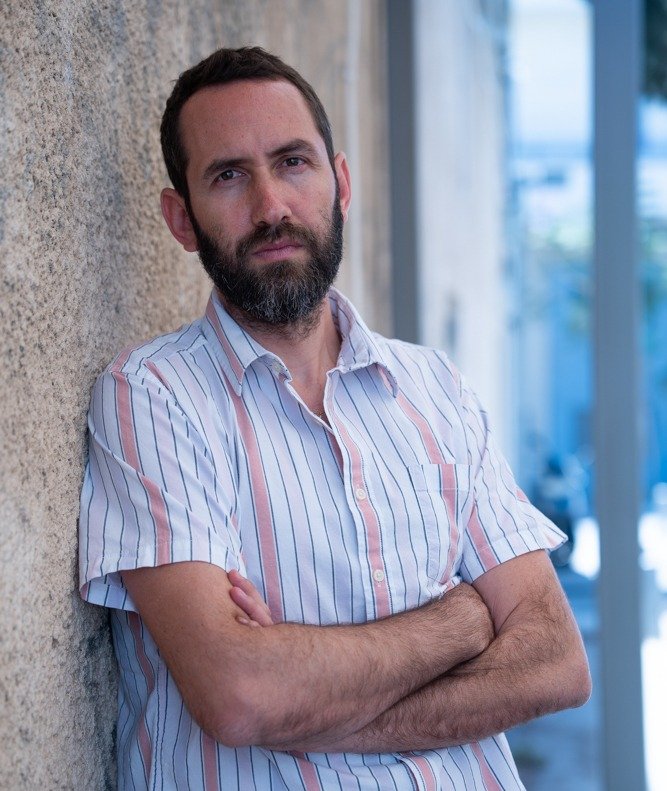
Guy Shalev
2025 Awardees
Individual Winner: Guy Shalev
Guy Shalev’s work stands as a powerful example of public anthropology in the face of atrocity. As Director of Physicians for Human Rights Israel (PHRI), Shalev is working to document Israeli crimes in Gaza and the West Bank and is advocating to end the Israeli genocidal assault on the Palestinian people.
Over the past three years, Shalev has led PHRI’s teams working on research projects, reports, and policy papers documenting Israeli war crimes and human rights abuses. He has also worked to publicize these findings widely, in venues like The New York Review of Books, Haaretz, and Democracy Now!
A May 2025 article in The New York Review of Books, co-authored with Neve Gordon and Osama Tanous, exposes the complicity of the Israeli medical establishment in the ongoing violence and details grave violations of medical ethics. It has been translated into six languages and helped prompt the British Medical Association’s unprecedented decision to sever ties with its Israeli counterpart. A July 2025 report concludes that Israel is committing genocide against Palestinians in Gaza. It has been widely covered by international media and human rights organizations, from Amnesty International to CNN, BBC, and The Washington Post.
In his numerous op-eds, Shalev has consistently called for an immediate ceasefire and demanded accountability from the Israeli medical community. He has given interviews to major local and international outlets on the targeting of Gaza’s healthcare system and the unlawful detention of Palestinian healthcare workers.
Shalev’s work at the PHRI draws on his academic anthropological work, as well as his background in medical anthropology and bioethics. Evoking a storm of criticism within Israel, his tireless calls on the international community to pressure the Israeli government to end its devastating assault on Gaza are exemplary of public anthropology.
Individual Honorable Mention: Amy Moran-Thomas
Anthropologist Amy Moran-Thomas’s observations about technological racism became the basis of significant biomedical research and policy changes in the United States during COVID.
Many medical devices that measure biomedical processes through the skin presume a white patient and set diagnostic standards accordingly. When COVID made the finger pulse oximeter an essential monitor to evaluate the severity of COVID (and potential need for more intense medical interventions), this technological history became medical racism in action. Moran-Thomas did not discover the problem—it was known but largely ignored for decades prior—but Moran-Thomas’s writing in public venues helped stitch together the dire implications of the problem as COVID raged forward. Her 2020 essay in The Boston Review became the basis of more serious reflection, technological innovation, and policy changes in American medicine. Specifically, it led U.S. Senators to request that the FDA conduct a review of the accuracy of the pulse oximeters across racially diverse patients and consumers. This then led the FDA to issue an alert about the pulse oximeter’s technical limitations.
We found her work worthy of an honorable mention because it led to real-world changes on the policy level, bringing anthropological critique of medical science to the attention of those charged with health policy.
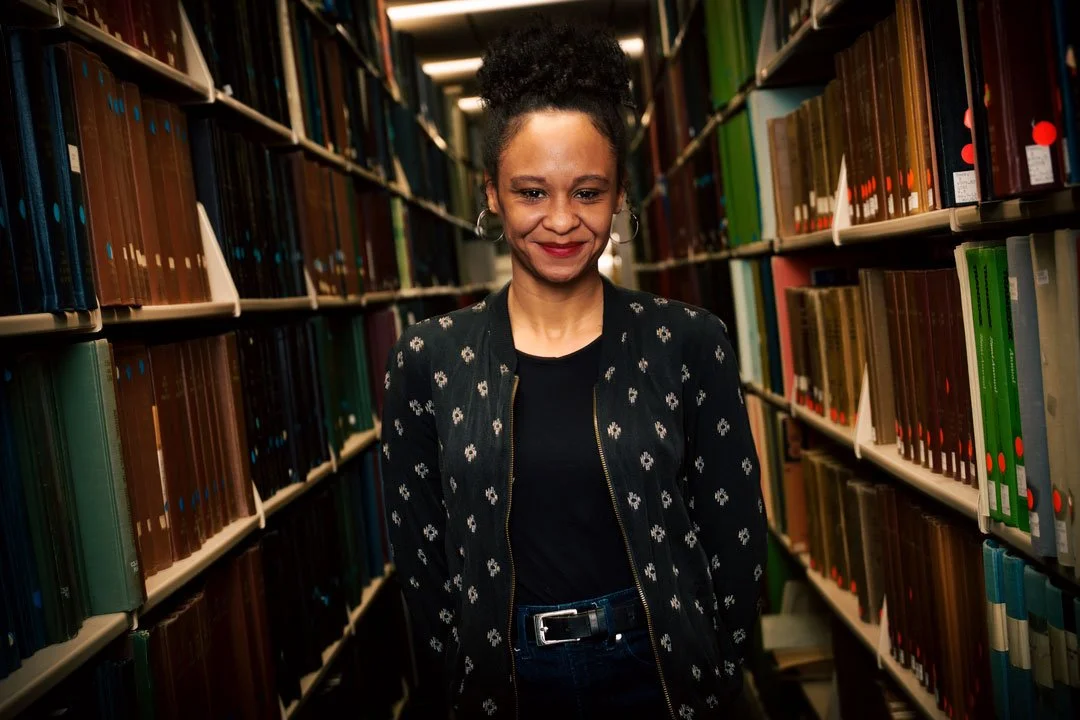
Tracie Canada
Individual Honorable Mention: Tracie Canada
Anthropologist Tracie Canada’s documentation of the racist history of college football in America became the basis for wide-ranging public engagements and essays.
Canada’s ethnographic research into the lived experiences of college football players and their families has made a splash in the world beyond anthropology, with essays published in The Guardian, Time, Scientific American, and Essence, and dozens of media interviews in venues such as NPR. The Black feminist lens she places on the college football industry provides us with a critical interpretive guide to the dark synergy of race and sports in American life. Her work offers guidance for much-needed reforms to revenue-generating college sports. She is also the founding director of the HEARTS lab (Health, Ethnography, and Race through Sports), which charts a path for undergraduate-centered research and advocacy in anthropology.
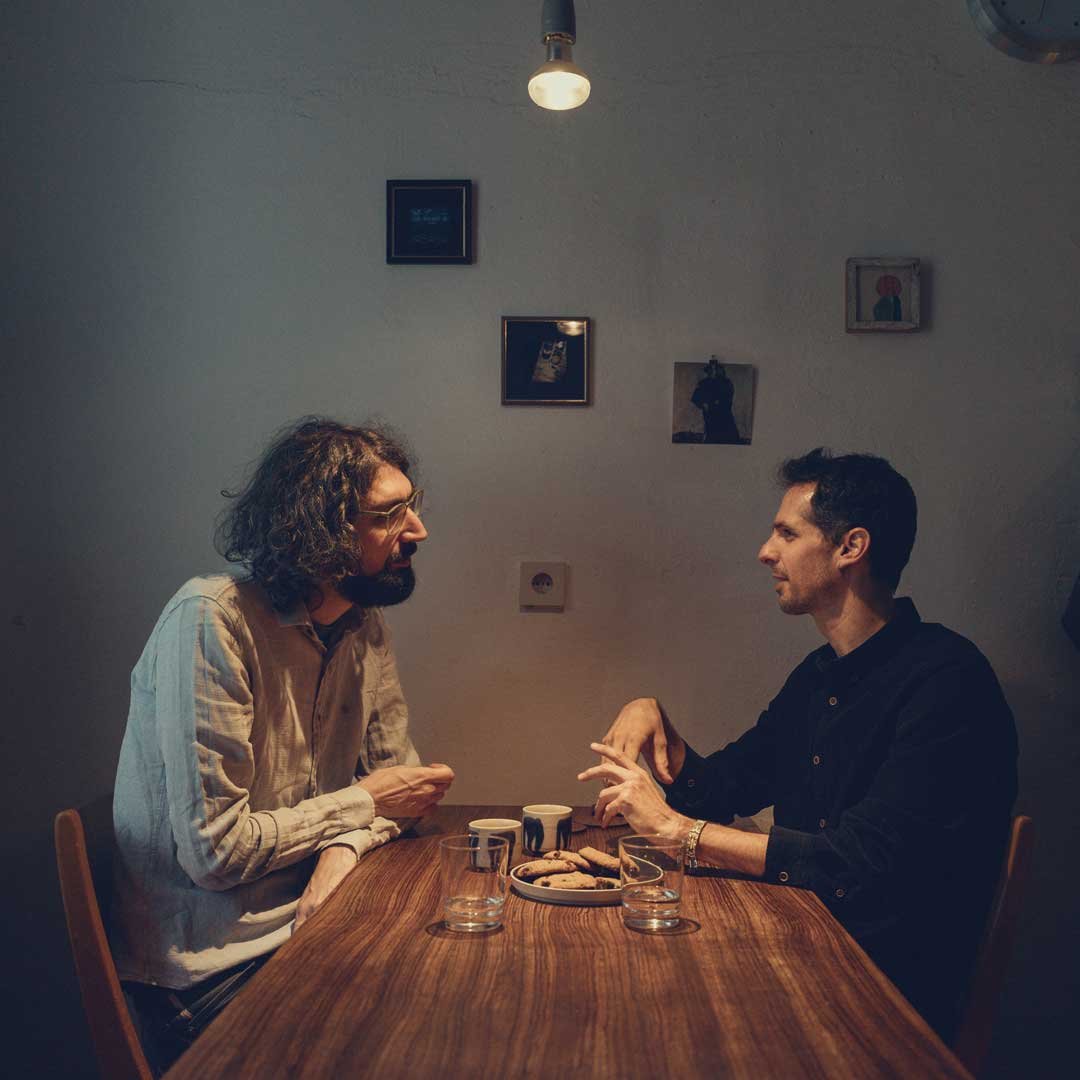
Kristóf Szombati and Erdem Evren
Group Winner: This Authoritarian Life
Kristóf Szombati and Erdem Evren
This six-episode podcast brings anthropological insight and ethnographic texture to urgent conversations about the global rise of neo-fascist authoritarianism, with the goal of challenging and combating it. The well-produced and widely endorsed series adds everyday details and regional stories to the question of how neo-fascist racism is taking hold around the world.
Each episode is historically grounded, offering analysis rooted in long-term ethnographic research and deeply held personal experience. The podcast draws on fieldwork conducted in Hungary, Turkey, East Germany, Gaza, Iran, and Russia, and includes a compelling sixth episode on speech and propaganda, exploring how metaphors are weaponized to kill compassion. Timely and accessible, this series is a welcome example of anthropologists engaging the broader public on the pressing issue of authoritarianism.
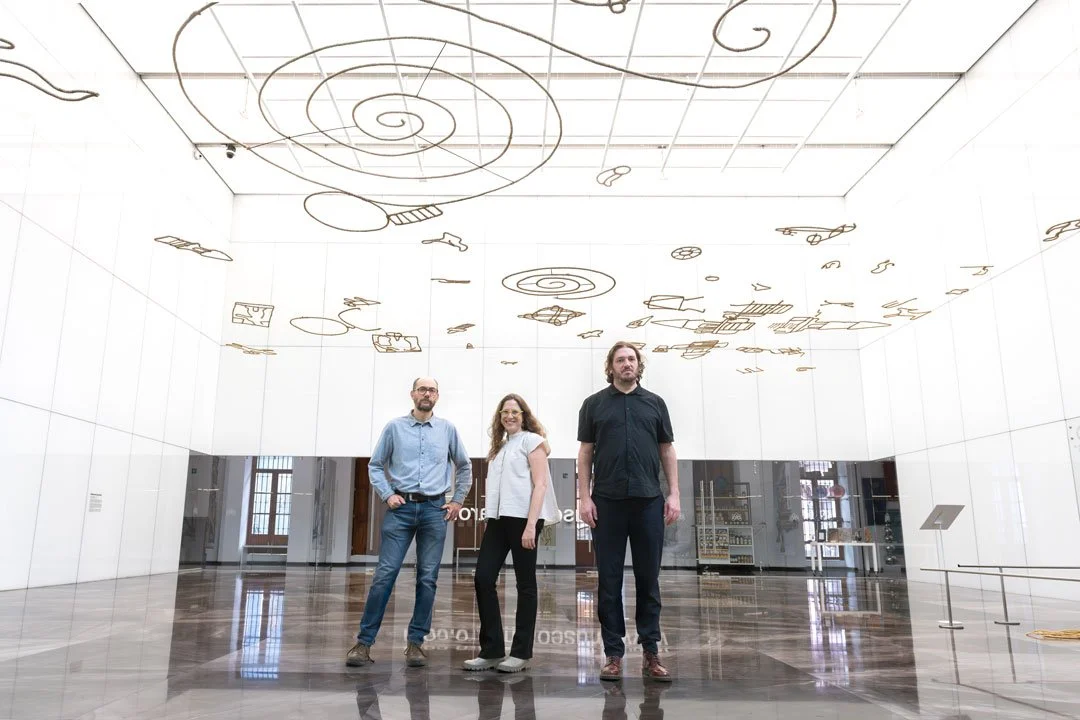
Installation view of “Estelas de Usumacinta” with Eduardo Abaroa, Emilio Chapela, and Sandra Rozental
Group Honorable Mention: Estelas de Usumacinta
Eduardo Abaroa, Emilio Chapela, and Sandra Rozental
This visually compelling museum installation explores the enduring impacts of extractivism shaping the Usumacinta River, Mexico’s “last living river.” Through carefully curated aesthetic choices, it offers an intervention into how we understand climate, change, and the narratives of history.
Grounded in long-term ethnographic research and developed in collaboration with indigenous communities and indigenous ways of knowing, the exhibition reimagines the Anthropocene as an ecologically entangled and socially complex nexus of resource and loss, life and death. The gallery’s creative portrayal of this endangered river has been widely acclaimed in Mexico. Its use of mixed media—incorporating writing, film, sculpture, photography, and other media—invites viewers to confront our changing climate in all of its anthropogenic complexity.
Past Awardees
-
INDIVIDUAL WINNERS
Winner: Maura Finkelstein
Following October 7, 2023, an article that Maura Finkelstein wrote in 2019 for Society for Cultural Anthropology’s Teaching Tools website resurfaced. Many readers online turned to her essay for an anti-Zionist Jewish perspective informed by astute anthropological, ethnographic sensibilities. Finkelstein since at least 2019 has been committed to queer, feminist, anti-colonial, anti-Zionist liberation against settler colonialism through her pedagogy and writing. Finkelstein’s ongoing work as a public intellectual exemplifies the kind of engagement and courage needed now in anthropology, demonstrating the relevance and significance of anthropologically informed analysis to the most difficult and consequential debates of our time. The consequences she has faced for this show us that relevance is not without risk, but that risks are worth taking to ensure that anthropological attunements to justice and injustice can reach a broader public.
Honorable Mention: Reighan A. Gillam
As a host of the New Books in Anthropology Podcast, Dr. Reighan A. Gillam has conducted a total of 57 interviews ranging in length from about 40 minutes to an hour and 20 minutes. Dr. Gillam’s podcast episodes reach an audience of about 2,500 per episode, which makes it one of the top 3% podcasts in the New Books Network, a sprawling soundscape with 70 to 100 new episodes per week. The task is gargantuan and we thank you for your dedication to expanding the reach of anthropological writing.
GROUP WINNERS
The King of Bangkok: Claudio Sopranzetti, Sara Fabbri, and Chiara Natalucci
“The King of Bangkok is a notable departure from conventional anthropological representation that still manages to remain faithful to—and even enhance—ethnographic principles and precision, while allowing its conceptual framework a far broader appeal than would have been possible with a standard style of ethnographic reportage. This work has already enjoyed a phenomenal success as a national bestseller for 18 weeks in Thailand and deserves this important recognition by the anthropological community.”
– Nominator Michael Herzfeld
The Police Torture and Community Healing Project: Asia Beason, Maame Owusua-Boateng, Devin Brown, Chelsey Carter, JahAsia Jacobs, Amelea Lowery, Jolen Martinez, Laurence Ralph, and Kaelin Rapport
“The Police Torture and Community Healing Project demonstrates a deep commitment to social justice and community engagement by applying anthropology to address the urgent issue of police violence and racialized governance. The project promotes awareness and discussion of the issues of police violence and community healing in public forums by utilizing ethnographic tools aimed at catalyzing collective reflections about self, world, and justice—with a social focus on educational outreach for school-aged youth.”
– Nominator Lucas Bessire
-
[Name redacted] is the 2023 winner of the GAD New Directions Award (Individual category) for a series of public essays documenting everyday life in Russia during the first 18 months of the “Special military operation” that Russian law forbids publicly calling a war. In such forums as Bulletin of Atomic Scientists, Mother Jones, and the London Review of Books the essays circle around a question that has baffled academic and publicist commentators: why is there so little public outcry against this war inside Russia itself? The New Directions Prize committee was deeply impressed by the bravery and reach of this body of work in keeping an anthropological eye steadily and unflinchingly trained on the urgent matter of war as it is presently happening.
The International Space Station Archaeological Project is the 2023 recipient of the GAD New Directions Award (Group category) for their extra-terrestrial archaeological work in studying the material culture of humans in space. More information about their project can be found on their website and in open access articles printed in Antiquity, Current Anthropology, Acta Astronautica, Religions, and the Journal of Spacecraft and Rockets as penned by project members Wendy Salmond, Justin Walsh, Alice Gorman, Paola Castaño, Rao Hamza Ali, Amir Kanan Kashefi, and Erik Linstead.
-
INDIVIDUAL WINNERS
Winner: David Bond (Associate Director, Center for the Advancement of Public Action (CAPA) and Faculty Member, Environment, Bennington College)
The General Anthropology Division (GAD) of the American Anthropological Association (AAA) announces David Bond as the 2022 winner of the GAD New Directions Award (Individual category) for two projects designed to hold negligent industrial facilities accountable. These facilities hid violations to environmental law under the emergency of COVID-19.
David Bond’s collaboration with frontline communities in upstate New York and in the US Virgin Islands demonstrates the critical relevance of public anthropology during a pandemic that banned much of public life in America. COVID-19 withdrew government oversight of many dirty industries. Some American companies found this an opportune moment to dump pollution into nearby communities with brazen disregard for environmental law and public health. A hazardous waste incinerator in upstate New York attempted to burn immense stockpiles of toxic firefighting foam despite there being no evidence that incineration breaks down these noxious chemicals and good reason to suspect it simply spreads them into nearby communities. A mammoth entrepot refinery in the US Virgin Islands experienced cascading operational failures that spewed an ungodly mix of aerosolized crude oil, asphyxiating sulfurous gases, and carcinogenic petrochemicals into the frontline neighborhoods for months on end. Bearing the brunt of these injustices, frontline communities in both places knew something was horribly wrong but struggled to get anyone to investigate their complaints during the COVID-19 lockdown. Collaborating with residents in both places, David Bond’s research helped shine an unflattering light on these environmental injustices during a pandemic that conspired against their public recognition. Bond worked to amplify the ethnographic realities of environmental injustice through writing opinion pieces for local papers, providing background interviews for national reporters, launching public websites that conveyed the lived fallout of ongoing lapses, testifying at hearings hosted by state agencies and community groups, drafting new legislation with congressional staffers, and joining with community groups to advocate for their seat at the table. Anthropology – as a method of inquiry and as a matter of emphasis – came to play an instrumental role in broadcasting both sites into national news and congressional deliberation. In a moment of withdrawn official concern, David Bond’s work provides compelling examples of the civic relevance of engaged ethnography to environmental science, policy, and justice. This public anthropology led to substantial victories for impacted communities even as the struggle against injustice persists.
The Reckless Rush to Burn AFFF
Environmental Justice for St. Croix
David Bond, Negative Ecologies: Fossil Fuels and the Discovery of the Environment (2022)
With this award, the GAD Awards Committee acknowledges this distinguished record of community-based ethnographically informed policies and interventions in the pursuit of environmental justice.
Honorable Mention: Jennifer S. Hirsch (Columbia) and Shamus R. Khan (Princeton)
Jennifer S. Hirsch and Shamus Khan have received an Honorable Mention for their use of ethnographic research to make groundbreaking and timely contributions to understanding and preventing campus sexual assault. This includes Sexual Citizens, published in January 2020 by WW Norton, which uses three quintessentially social scientific concepts – sexual projects, sexual citizenship, and sexual geographies – to make sense of sex and sexual assault in the campus context. Sexual Citizens changed the national conversation about campus sexual assault, presenting an analysis of sexual violence’s complex and yet modifiable social roots that opens the door to transformational campus-wide prevention approaches. Hirsch and Khan have built on the book’s highly successful publication (selling more than 25,000 copies, now in its fifth paperback printing, soon be published in Mandarin) by creating the Sexual Assault Prevention and Campus Equity (SPACE) toolkit, developed between June and December 2021, which offers campuses a (free) roadmap, grounded in the concept of sexual geographies to mitigate the power-based inequalities that lead to campus sexual assault by considering and changing the allocation of social and residential space on campuses. Hirsch and Khan’s work is emblematic of how anthropological understandings can be leveraged to generate innovative solutions to persistent social problems.
The GAD Awards Committee acknowledges this projects’ empirically informed analysis and prevention measures of campus sexual assault.
GROUP WINNERS
Winner: Anthropology Book Forum (Emilia Groupp (Stanford) and Rasmus Rodineliussen (Stockholm University, Editors)
The General Anthropology Division (GAD) of the American Anthropological Association (AAA) is pleased to announce the Anthropology Book Forum as the 2022 winner of the GAD New Directions Award (Group category).
The Anthropology Book Forum (ABF) was founded by the American Anthropological Association as an experimental digital platform aimed at accelerating the scholarly book review process and expanding conversations around newly published work. As an open access journal, committed to a set of principles that aims to reduce barriers to accessibility, the Forum publishes reviews of newly published work in multiple formats every Monday, 52 weeks a year. Based on the idea that book reviews are not just summaries of academic texts, but engagements with scholarship, ideas and authors, the Forum seeks to facilitate connections and exchange between authors and readers within and outside of anthropology. Working with over 100 publishers around the world, we continuously seek to make available a broad range of texts relevant to anthropological audiences, broadly conceived. With an online readership of around 3,000 per month, and a contributor base of 1300 and growing, we are constantly exploring and experimenting with new modes of engagement and new forms of written, audio and visual review formats. Our Facebook page currently has over 2,300 followers, and we are in the process of expanding our website. With avid engagement, the Forum demonstrates that such spaces play a crucial role in facilitating a vibrant exchange of knowledge, particularly in a time increasingly characterized by exclusion and remote virtual connectivity brought on both by the pandemic and ongoing political, economic and academic boundaries. As the new site grows, it will facilitate the expansion of new review formats, cross-disciplinary conversations and a space for ongoing experimentation and dialogue.
In their selection, the GAD Awards Committee recognizes the Anthropology Book Forum for the vision, commitment, and broad impact that diverse and accessible formats of anthropological knowledge offer multiple readerships within and outside the academy.
-
Fieldsites (Massachusetts Institute of Technology), Heather Anne Paxson, Brad Weiss, Chris Nelson, and Jessica Lockrem)
The General Anthropology Division (GAD) of the American Anthropological Association (AAA) is pleased to announce Fieldsites as the 2021 winner of the GAD New Directions Award (Group category). Fieldsights is Society for Cultural Anthropology’s (SCA) open access website for nonjournal publications.
Now in its tenth year, Fieldsights has been widely emulated, helping to catalyze the growth of nonjournal digital publishing in anthropology. Its various sections speak to and on behalf of diverse audiences around the world in both textual and nontextual formats. Today, Fieldsights has coalesced into two distinct tracks: (1) Editors’ Forum, published eight times a year, featuring Hot Spots and Theorizing the Contemporary, guest-edited series of ten or more essays that are reviewed by the editors of Cultural Anthropology; and (2) Contributed Content, written and/or curated by the more than forty graduate students who volunteer, at any one time, as part of SCA’s flagship Contributing Editors (CE) Program. In 2020, Fieldsights as a whole received an impressive 773,937-page views (an increase of 12% over the previous year), representing 318,428 users (an increase of 19% over the previous year), fewer than half coming from the United States (44%), with others coming from the United Kingdom (8%), Canada (6%), India (5%), Germany (3%), Australia (2%), Brazil (2%), Philippines (2%), and China (2%). When open access publishing in Anthropology remains all too rare in the United States, SCA’s Fieldsights demonstrates the scholarly and community worth of investing both labor and financial resources into a durable, well-curated, open access publishing platform.
Co-Winners: Margaret Dorsey and Miguel Díaz-Barriga; Joshua Hamzehee
The GAD Award Committee deliberations resulted in a tie, with Margaret Dorsey and Miguel Díaz-Barriga (University of Richmond, VA) and Joshua Hamzehee (University of Northern Iowa, Cedar Falls) as co-winners.
Margaret Dorsey and Miguel Díaz-Barriga
From participating in marches and hearings to creating digital archives, curating art exhibits and proposing an AAA resolution, Díaz-Barriga and Dorsey have called attention to the transformations in democracy and citizenship associated with the global proliferation of border walls. Through photography (both their own and the work of other anthropologists and photographers) they document how militarization has altered the U.S. Mexico border region. Their curatorial projects chronicle the construction of the U.S Mexico border wall, the increased presence of agents and surveillance technologies in the region, and the destruction of wildlife preserves. Central to their work is exploring how militarization reconfigures citizenship and belonging. In their book, Fencing in Democracy: Border Walls, Necrocitizenship, and the Security State (Duke 2020), the authors argue that border residents are enmeshed in a complex logic of militarization that simultaneously seeks to exclude and render them as necrocitizens. For Díaz-Barriga and Dorsey border wall construction is not a solution to the complex social issues facing the globe but rather a violent response that creates suffering and death.
Joshua Hamzehee
The GAD Award Committee recognizes Joshua Hamzehee for innovative work during the last three years, Baton Rouge SLAM! An Obituary for Summer 2016: A Critical Performance Ethnography of Eclectic Truth Poetry Slam, based on ethnographic research with members of the Baton Rouge slam poetry community following a tragic summer 2016. That summer, protests, natural disasters, and community losses flooded the “Red Stick.” One year later, after receiving permission to interview local slam poets and theatricalize their slam poetry, Hamzehee created a script, staged, and toured the ensemble production, Baton Rouge SLAM! An Obituary for Summer 2016, inviting residents to reflect on a capital divided. This project explores the entire performance ethnography process through the lens of a community of artistic journalists, from its conception, to the methods, to the touring performance, as well as community reflections. By placing ethnographic experiences, interviews with core Eclectic Truth members, and their slam poems in conversation with theories of social drama, performance, and critical ethnography, Hamzehee paints a portrait of Eclectic Truth Poetry Slam and Baton Rouge, LA, during fall 2016. Blending poetry and performance with oral history, community stories, heartbreak, and joy, the author contends slam poetry communities are worthy of and deserve further performative exploration, community investment, and attention from dominant publics.
-
Elemental Productions
The General Anthropology Division (GAD) of the American Anthropological Association (AAA) is pleased to announce Elemental Productions as the 2020 winner of the GAD New Directions Award (Group category). Since 2007, Elemental Productions has been producing ethnographic films rooted in psychological and visual anthropology that explore the intersection of mental health, culture, and personal experience in Indonesia under the direction of anthropologist Robert Lemelson.
Elemental Productions has produced over a dozen films ranging from topics such as neuropsychiatric and psychotic disorders (Afflictions series), genocide and trauma (40 Years of Silence, Shadows and Illuminations), child development (Kites and Monsters), rituals (Ritual Burdens), globalization (Memory of My Face), stigma and social rejection (The Bird Dancer), funerary practices (Ngaben), trance and possession (Jathilan), and polygamy and gender based violence (Bitter Honey, Thorn).
In the last decade, Elemental’s work has diversified in experiments with new media and new possibilities for use, distribution, collaboration and interaction. They have created an iBook on mental illness (Shadows Multi-Touch), a blog on psychocultural cinema (PCC), a sensory ethnography (Tajen) and an interactive multimodal project on the Balinese cockfight (Tajen: Interactive), a journal and blog article on the process of making a multimodal web documentary (American Anthropologist, Multimodal Anthropologies). The Elemental team is currently working on an ethnographic film, sensory experiment and multimodal project on autism in Java.
In making their selection, the GAD Awards Committee recognizes Elemental Productions for its expansive and wide-ranging contributions to anthropological media and for films that depict complex social experiences and cultural quandaries in ways that make cultural difference accessible to a broader audience, precisely in the spirit of the GAD New Directions Awards.
Thurka Sangaramoorthy
The General Anthropology Division (GAD) of the American Anthropological Association (AAA) is pleased to announce Thurka Sangaramoorthy as the 2020 winner of the GAD New Directions Award (Individual category) for the project “Afterlives of AIDS: Oral histories of Black women living and aging with HIV.” This on-going, multimodal project centers African American women’s journeys of finding meaning and community in the face of persistent violence and trauma. Afterlives of AIDS illustrates how HIV has shaped women’s lives and how it has impacted their historical and contemporary roles within Black familial systems and broader communities. The project presents holistic and complex stories of African American women who have long been ignored in the history of HIV and often cast aside as drug addicts and prostitutes in popular and scientific discourse. It also documents women’s own analysis of their experiences of intersectional stigma, chronicity, and aging.
Sangaramoorthy builds on traditional forms, such as oral history and photography, with innovative approaches to bring racial justice-focused activism to anthropology, the use of storytelling to elevate the voices of those most impacted by the HIV epidemic; to better inform policy and practice, and contribute to social action. The Afterlives of AIDS project encompasses digital video, interviews; photographs, op-eds in national newspapers and magazines, including pieces reprinted in the Washington Post, Huffington Post, and Newsweek reaching over 45,000 readers; and a forthcoming book. All project-related materials—including portraits, oral history transcripts, digital voice recordings, and published literature—have also been acquired by the Smithsonian Institute for their permanent digital archival collection, to be housed in the Smithsonian’s Online Virtual Archives (SOVA) by the end of 2020. Sangaramoorthy is also collaborating with The Story Collider—an organization which works with storytellers from both inside and outside science to develop stories, and shares them through weekly podcasts and live shows around the world—to design and lead a one-day workshop to support women and gender minorities who are HIV positive to develop and tell their personal stories, along with their community of clinicians, researchers, and policymakers, a necessary first step to launching a national storytelling campaign that creates intentional spaces for African Americans to share their stories of the lived experience of HIV and for the public to hear these narratives.
In making this award, the GAD Awards Committee recognizes the impressive scope, methodological rigor, ethical and public commitment of Sangaramoorthy’s work. The Afterlives of AIDS project crosses multiple borders, expanding access to anthropological knowledge to new publics, in new forms and contexts.
-
The Center for Imaginative Ethnography
The Centre for Imaginative Ethnography (CIE) is a transnational independent research collective formed in 2011, led by socio-cultural anthropologists Alexandrine Boudreault-Fournier (University of Victoria), Dara Culhane (Simon Fraser University), Denielle Elliott (York University), Magdalena Kazubowski-Houston (York University), and Cristina Moretti (Simon Fraser University). Its five co-curators and eighty-fourcurrent members include scholars, artists, artist/scholars, activists, and practitioners located around the world. The CIE offers a space for communication and collaboration, debate and practice, creativity and action generated by experimental and emergent ethnographic methodologies that integrate and fuse creative arts, digital media, and sensory ethnography, and where new ethnographic writing is encouraged in teaching, theory, and practice.
In making their selection, the Award Committee noted the CIE as an excellent and truly collaborative long-term intervention in the domain of pubic anthropology that fosters experimentation in genre, media, and presentation, and in new venues that link anthropology and the human sciences to producers and audiences of across the arts.
Joint Winners: Ilana Gershon, ChorSwang Ngin
Award Committee deliberations resulted in a tie, with Ilana Gershon (Indiana University) and ChorSwang Ngin (California State University, Los Angeles) as joint winners
Ilana Gershon
The award recognizes Ilana Gershon for a body of work that fosters anthropological conversation through a variety of channels and range of scholarly and public outreach activities. This work encompass two books for the general public; the CaMP anthropology blog and virtual reading group; and a slew of public outreach that includes: two dozen articles and guest blogposts for magazines and websites; and over seventy-five radio, podcast, and news interviews and appearances in local, national and international media outlets.
Gershon’s most recent book, Down and Out in the New Economy (2017) is written for a general public, and demonstrates that linguistic anthropology offers many useful analytical insights for understanding the contemporary U.S. corporate hiring ritual, and evaluating the advice commonly given to jobseekers. In The Break-Up 2.0: Disconnecting over New Media (Cornell 2010, 4) Gershon argues that new media not only create new forms of connection and new networks, but also new possibilities for disconnecting. The book, which is widely taught and has received attention from outlets from Teen Vogue to the New York Times, explores the current moment as one in which new media have been introduced without consensus about the ethics of using them.
Gershon has been running the CaMP anthropology blog at the intersection of linguistic anthropology, media anthropology, and performance studies since 2016. The blog showcases new books, author interviews, and recent dissertations, and is accompanied by a virtual reading group that brings anthropologists from Belgium, Brazil, Israel, Mexico, the United Kingdom, and U.S. together monthly via video conferencing to speak with the authors of new books.
The Award Committee noted Gershon’s work as an outstanding example of anthropology addressed to a broad range of publics, and a model of the discipline’s contemporary relevance. They were particularly impressed by the balance of rigor and accessibility in her books, engaging general readers with concrete insights they can “apply”, while offering broader conceptual understanding. Gershon’s contributions across this wide range of scholarly, mentoring, and public outreach activities are impressive and exactly the kind of work the New Directions Award was created to honor.
ChorSwang Ngin
The Award Committee recognizes ChorSwang Ngin for her work of the last 17 years as an anthropological expert witness helping attorneys and their asylum petitioners to gain favorable asylum outcomes; and for her book, Identities on Trial in the United States: Asylum Seekers from Asia(Lexington 2018) that expands anthropological perspectives through engagement with the legal process for verifying the identities of the asylum seekers in United States Federal Courts. Ngin addresses the problematics of identifying Asian asylum seekers without re-inscribing “race” and without essentializing culture. The project extends from Ngin’s work with Vietnamese boat people in Southeast Asian refugee camps 35 years earlier. Her work is timely and speaks to the current humanitarian crisis of refugees and asylum seekers globally, demonstrating the many ways anthropological engagement is possible through teaching, training, research, organizing conference panels, local and international collaboration.
Ngin bridges applied and public anthropology, bringing anthropological expertise into the arena of asylum claims and refugee status, and expanding in new directions as a scholar, mentor, teacher, and, most recently, playwright. She co-authored The Houseguest from Xinjiang, a play about a Chinese Muslim in the U.S. caught in the Muslim ban that forces us to think about identity making. It has had several staged readings and was produced at University Student Union Theatre at Cal State LA in 2017.
Ngin regularly co-presents with immigration attorneys at academic conferences, and works to get students at her large, urban, Hispanic-serving, public university involved in asylum work through teaching, mentoring, and training. For example, she organized a session at the Society for Applied Anthropology (SfAA) meetings specifically to educate anthropologists and graduate students about this field.
International in reach—Ngin has been working with the Malaysian state and judges and attorneys in Europe, educating on the role of the anthropological expert witness in asylum cases—Ngin’s work also has had significant local and personal impacts for generations of Cal State LA students, and the 16 people for whom she has helped to secure asylum.
-
Tatiana Chudakova, “Plant Matters: Buddhist Medicine and Economies of Attention in Postsocialist Siberia.” Appearing in American Ethnologist vol. 44, no. 2 (2017), pp. 341–354.
Tatiana Chudakova’s masterful exploration of Buddhist medicinal practices in multiethnic southeastern Siberia effectively combines medical and environmental anthropology, while incorporating important economic, legal, and cosmological considerations. Framed through a multispecies ethnographic approach, which highlights the complex relations between human and vegetal life, “Plant Matters” foregrounds sowa rigpa (Tibetan medicine) practitioners’ activities, understandings, and efforts to manage the volatile potencies of medicinal substances in a context of postsocialist deindustrialization, state regulation, and flexible religious observances. Through introducing a process that she calls pharmacopoiesis—explained as the socially, politically, and historically contingent labor of medicine making—Chudakova challenges human-centric notions of healing efficacy by illuminating the multiple modes of attention surrounding the fickle entanglements between human and non-human actors.
In making their selection, the Awards Committee noted Chudakova’s skillful blend of theory, her refreshing and engaging writing, and her effective layering of different sub-fields of anthropological knowledge. Accordingly, the committee recognizes “Plant Matters: Buddhist Medicine and Economies of Attention in Postsocialist Siberia” as an exemplary piece of cross-field anthropological scholarship.
Somatosphere
The New Directions Awards Committee recognizes the collaborative website Somatosphere for its commitment to and success in promoting medical anthropology and related disciplines to the broader public over the past decade. As a consummately collective enterprise, Somatosphere features an editorial collective comprised of approximately seventy rising and established scholars working in multiple fields and hailing from several continents. To date, the site has over 1,200 posts, over 600 total contributors, an average of between 20,000 and 30,000 unique site visits per month, and a robust social media presence. In addition to being a powerful public hub for information dissemination, debates, and discussions around medical anthropology, Somatosphere provides space for experimenting with different forms of scholarship, accessing pedagogical resources, and engaging in conversations across national and linguistic boundaries. Somatosphere’s core substantive content—which includes research and fieldwork reports, conceptual pieces, book reviews, interviews, and conference reports—has been praised for its high quality, positively reviewed in American Anthropologist, and cited in several leading anthropological journals. As a notable example of the website’s public reach, a 2014 piece on the Ebola outbreak (by contributor Ann Kelly) was picked up by NPR’s Weekend Edition and later translated and published on the Spanish-language news site La Marea. The Awards Committee was deeply impressed with Somatosphere’s leading-edge approach to engaging topics that are of vital contemporary interest; its success in gaining traction among public health, medicine, and policy sectors; and its consistent contributions to the ecosystem of anthropological content on social media.
2010 American Anthropologist review of Somatosphere
Somatosphere “Foreign Correspondents” series (featuring reviews of books published in languages other than English)
C. Todd White
The New Directions Awards Committee recognizes C. Todd White (Assistant Professor-in-Residence in the Department of Anthropology at the University of Nevada, Las Vegas) for the work he has done to preserve and make public a continuous archive and history of the LGBT rights movement in the U.S. since the 1950s. Todd’s achievements center on the Tangents Online website, which he administers, as well as a broad range of initiatives and labors he has undertaken over the past twenty years to preserve, make accessible, and build public engagement around LGBT issues. These include his efforts to: recruit and cultivate contributors to extend, comment on, and discuss the history of homosexual rights; establish a scholarly archive of materials collected by the Homosexual Information Center (HIC) as a Special Collection at the Oviatt Library at California State University Northridge; and publish in a broad range of publicly accessible outlets.
To date, Todd has curated, edited, and tagged over 800 pages of information for the Tangents Online website. The Vern and Bonnie Bullough Collection on Sex and Gender is one of the premiere archives on sex and gender in the U.S. and among the most used special collections at Cal State Northridge. In addition, an act of a play that Todd has been working on was produced and presented at the 2016 Playwrights and Actors Festival (in New Hope, Pennsylvania) and received the festival’s New Voices award. Perhaps most impressive, Todd’s tireless work has been sustained without a long-term teaching appointment until recently.
The Awards Committee applauds Todd for his unwavering commitment to important bridge-building work, his thoughtful approach to public engagement, and his efforts to profile and interview elderly and lesser-known figures in the ongoing movement for LGBT rights.
Featured interview with Steve Schalchlin, songwriter, playwright and long-time AIDs survivor (in A&U Magazine)
-
Group Award: SAPIENS (sapiens.org)
An online publication dedicated to popularizing anthropological research to a broad, public audience, in its first two years SAPIENS has already become a vital digital space for anthropology on the Web. Through news coverage, features, commentaries, reviews, photo essays, videos, and much more, SAPIENS provides a public platform for anthropological research and insights into current events. Through publishing pieces aimed at deepening readers’ understanding of the human experience—including works that explore novel, thought-provoking, and unconventional ideas—SAPIENS has successfully transformed how the public consumes anthropology, and, in turn, how people see themselves and their world.In addition to providing quality scholarship in sophisticated yet accessible formats, the Awards Committee cites SAPIENS’ broad reach and impact. As of September 2017, twenty-one pieces from SAPIENS have been published through its syndicated partnerships with Discovery Magazine, Scientific American, Slate, The Atlantic, and Aeon. The online publication has amassed over two million page views, fifty-eight thousand Facebook “likes,” eight thousand twitter followers (@SAPIENS_org), seven thousand email subscribers, and 234 published articles accessed from every country in the world except North Korea.
Individual Award: Katie Hinde
The New Directions Awards Committee recognizes Dr. Katie Hinde (Arizona State University) for her contributions to public anthropology through her “Mammals Suck… Milk!” blog and her innovative educational tool, March Mammal Madness—an annual 64-animal bracket tournament where mammals go head-to-head in combat with the most biologically fit advancing. Since 2011, “Mammals Suck… Milk!” has featured creative and accessible, yet academically rigorous blog entries showcasing research on mothers’ milk, breastfeeding, and lactation for the general public, clinicians, and researchers. Over the past five years, March Mammal Madness has become an international phenomenon with multiple contributing scientists. In 2017, over 200 educators requested advance access to the bracket chart for lesson planning (suggesting that at least 10,000 students played the alternative March Madness tournament). March Mammal Madness has been featured in the Boston Globe, Chicago Tribune, and on NPR. It currently has over 2000 followers on Facebook and 5800 Twitter followers. The Awards Committee applauds Hinde for her effective approaches to engaging people in issues surrounding mammalian evolution as well as for her creative appropriation of American sports culture in these efforts.Write-ups for the New Directions and Cross-Field Scholarship Awards were composed by Anthony Kwame Harrison drawing on excerpts from nomination letters by Melanie Beasley and Chip Colwell, as well as comments from members of the awards committees.
-
Winner: Kristina Killgrove, for her work on mental floss, Forbes, and Powered by Osteons
Honorable Mention: Caitrin Lynch and Sara Hendren for Engineering at Home (engineeringathome.org)